

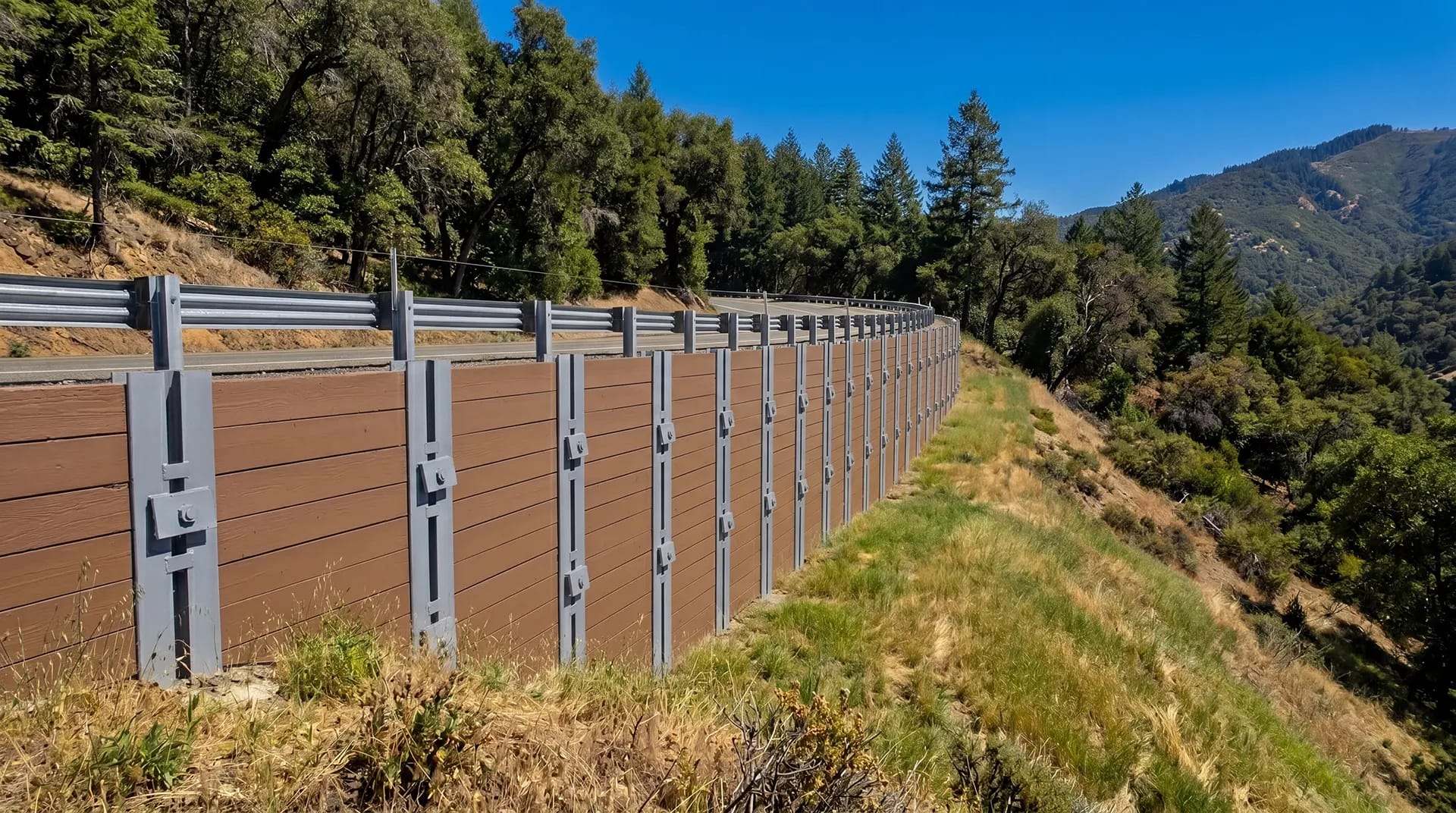
High-Performance Fire Protection That Lasts
Our Fire Protective Coating System rejects radiant heat on contact. With durable, non-toxic coatings tested to ASTM E84, E119, E162, and E662, the system provides long-term mitigation for structures at risk, preserving critical infrastructure when every second counts.
Show me solutions for…
Tell us about the solution you're looking for. We'll take care of the rest.
Key System Components: Fire Protective Coating System
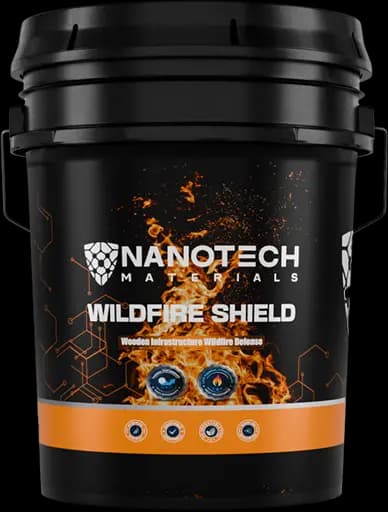
Wildfire Shield
Wildfire Shield is NanoTech Materials' revolutionary passive fire protection solution engineered specifically for open air critical wooden infrastructure. Designed for bridge and highway infrastructure, utility poles, barrier fences and more, it withstands extreme temperatures up to 3,272°F while preventing flame spread and minimizing heat transfer. Tailored for DOT and public-sector projects, Wildfire Shield helps extend the life of critical infrastructure in wildfire-prone areas—providing the durability, performance, and response time today's fire mitigation efforts demand.
What is passive fire protection for open-air wood structures?
Passive fire protection for open-air wood structures is protection that is already in place on the wood itself before a fire arrives, working without power, activation, or human intervention, on assets that stand exposed to weather rather than inside a framed building. Timber lagging walls, utility poles, fencing, trail structures, and bridge timbers cannot be sheltered by sprinklers or compartment walls, so the coating on their surface is the protection layer.
Most passive fire protection products were designed for interior structural steel and mass timber framing. The NanoTech Fire Protective Coating System was engineered for the opposite environment: exterior wood that faces sun, rain, and temperature swings year-round, and radiant heat and ember exposure when a fire passes.
How the system works
The system is built on NanoTech's patented Insulative Ceramic Particle platform. The coating rejects radiant heat at the surface and bonds directly to wood, and it is non-sacrificial: there is no intumescence and no charring step, so the film does not need to swell, react, or consume itself to do its job. It works on contact from the day it cures.
That mechanism matters for exterior assets. Intumescent coatings activate by swelling into a char layer, which is a one-time reaction, and salt-based sprays leach out of wood as it weathers. A non-sacrificial film keeps its protective character through weather cycles; after direct flame contact, the coating must be inspected and recoated where the film was damaged.
Performance is tested to named standards: ASTM E84 surface burning characteristics, ASTM E119 fire resistance, ASTM E162 radiant-panel flame spread, and ASTM E662 smoke generation. Those test methods, not adjectives, are the basis a specifier can hold the system to.
Where it is deployed
Wildfire Shield, the system's flagship coating, is deployed on state department-of-transportation timber infrastructure, including timber lagging walls protected in place on live highway corridors. Published project work includes six timber lagging walls totaling 7,150 square feet in South Sequoia and a 3,000 square foot wall coated during a Salinas bridge repair.
- Wooden infrastructure fire protection: timber lagging, retaining walls, and DOT assets.
- Bridge and overpass wildfire defense: approach timbers and lagging on transportation corridors.
- Defensible-space fence protection: wooden fencing that connects structures to wildland fuel.
- Trail and park structures: boardwalks, signage, and recreation assets in fire country.
Choosing between fire protection approaches
The honest comparison depends on the asset. For wood that must stay in service outdoors for years, the questions are whether the product bonds to the substrate, how it weathers, what it costs per event versus per decade, and what the named test results actually cover. The comparison library puts Wildfire Shield side by side with the alternatives, including where each alternative is the better pick: versus intumescent coatings, versus topical fire-retardant sprays, and versus fire-retardant-treated lumber.
For product-level detail, application data, and the documentation package, start with Wildfire Shield or the technical documentation library.
Request a Fire Protection Assessment
Tell us about the structures you need to protect and a specialist will follow up on substrate, coverage, and application planning.
- Rejects radiant heat and bonds to wood
- Non-sacrificial, with no intumescence and no charring step
- Tested to ASTM E84, E119, E162, and E662
- Deployed on state department-of-transportation timber infrastructure