

Application
Defensible Space: Turn Wooden Fences Into Passive Fire Barriers
Fences in wildfire-prone zones act as ignition pathways straight to homes. Wildfire Shield is a non-toxic protective coating that transforms standard wood fencing into a passive fire barrier — qualifying for grant funding and improving community fire readiness.
The Challenge
Wooden fences are ignition pathways, not barriers
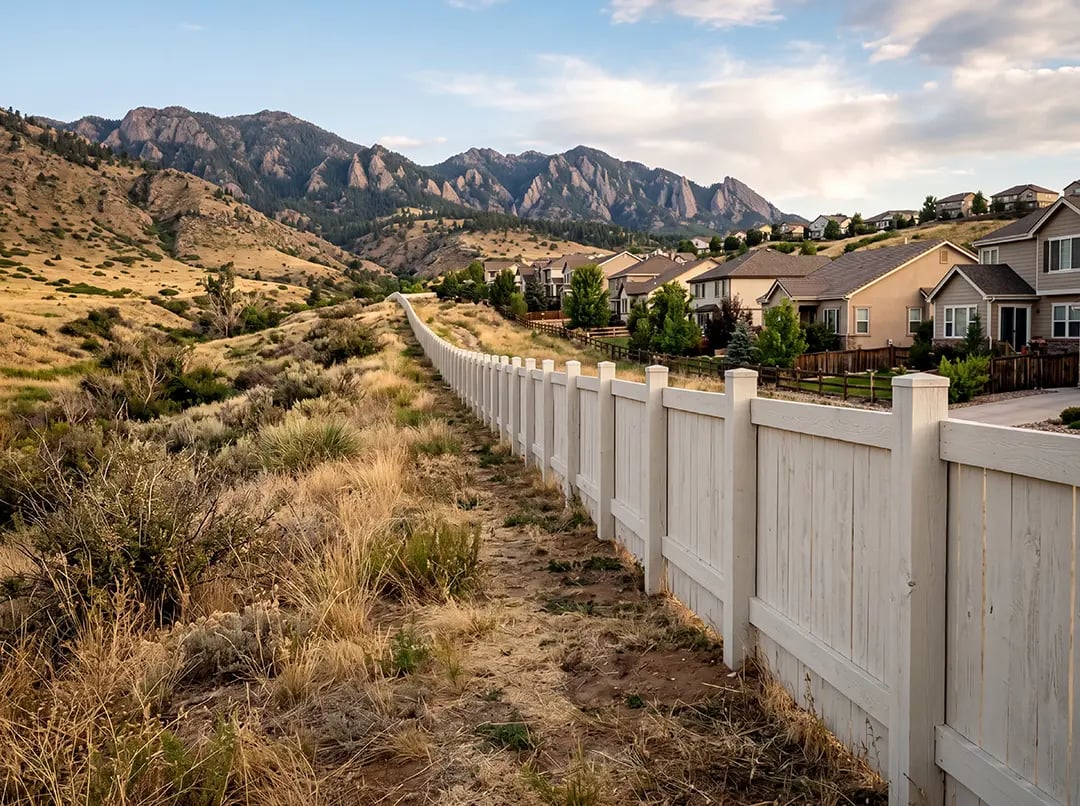
In wildland-urban interface (WUI) zones, the most common ignition source for a structure isn't the fire front — it's a wooden fence connecting the wildland to the home. Untreated cedar, pine, and redwood fences ignite fast, carry flame for hundreds of feet, and bring fire directly to siding, eaves, and decks.
Insurance carriers know this. So do fire marshals. Many homeowners now face non-renewal, premium hikes, or compliance demands tied to defensible space and combustible materials within Zone 0.
Removing wooden fencing isn't always feasible — and HOAs, municipalities, and homeowners need a way to harden the fences they already have without losing the look or replacing miles of materials.
The Solution
Wildfire Shield: a passive fire barrier you brush onto wood
Wildfire Shield is a high-performance, non-toxic coating that rejects radiant heat and bonds to wood. NanoTech's patented Insulative Ceramic Particle technology turns standard wooden fencing into a passive thermal barrier without changing the look or installation method.
Unlike intumescent paints that activate once and need replacing, Wildfire Shield resists ignition repeatedly, and after direct flame contact the coating must be inspected and recoated. It's certified for use on wooden assemblies and increasingly recognized in WUI grant programs and community fire readiness initiatives.
Why HOAs and homeowners use Wildfire Shield
Resists ignition repeatedly
Performs across multiple fire events, not a one-time intumescent; after direct flame contact the coating must be inspected and recoated.
Non-toxic & low-impact
Safe around landscaping, pets, and people. No hazardous off-gassing or runoff.
Qualifies for grant funding
Eligible under many WUI mitigation grants and community fire readiness programs.
Preserves the look of wood
Brush- or spray-applied without changing the fence's aesthetic profile.
Works on existing fencing
Apply to cedar, pine, redwood, and treated wood already standing, an option worth pricing against replacement.
Insurance & compliance support
Document your defensible space upgrade for carriers and code-compliance reviews.
Where defensible space coatings make sense
Single-family homes in WUI zones
Protect Zone 0 wooden fencing connecting wildland to siding, decks, and eaves.
HOAs & master-planned communities
Coordinate community-wide fire hardening of shared fencing and gateways.
Municipal fire mitigation programs
Deploy on city-owned fencing along greenbelts, parks, and right-of-way buffers.
Wildfire grant projects
Match the technical scope required by FEMA, state, and local mitigation grants.
Insurance compliance retrofits
Document an engineered protective coating to support renewal and underwriting.
Wineries & rural estates
Harden long property fence runs without losing the look or replacing miles of material.
Engineered for the wildland-urban interface
ASTM E84
Fire Testing
Non-Toxic
Toxicity
Untreated & Treated Wood
Substrate
Brush · Spray · Roll
Application
TIME Best Inventions 2024
Recognition
Made in the USA
Origin
Wildfire Shield is part of NanoTech's TIME Best Invention-recognized Insulative Ceramic Particle platform, the same fundamental technology used to protect bridges, utility infrastructure, and DOT timber lagging in wildfire-prone regions.
Wildfire fence protection FAQs
How does Wildfire Shield protect a wooden fence from wildfire?
Wildfire Shield uses NanoTech's patented Insulative Ceramic Particle technology to slow heat transfer into the wood, raising the effective ignition threshold under flame impingement and radiant heat. The fence becomes much harder to set off from the radiant heat and ember showers that drive most WUI structure ignitions.
Does Wildfire Shield work after multiple fire events?
Yes, with maintenance. Unlike intumescent paints that consume themselves on first activation and need replacing, Wildfire Shield is engineered to resist ignition repeatedly, and after direct flame contact the coating must be inspected and recoated. Treated wood can come through multiple fire exposures with the protective system intact when that inspection and recoat is done.
Is the coating safe around pets, plants, and people?
Yes. Wildfire Shield is non-toxic, with no hazardous off-gassing or runoff after cure. It's safe to use around landscaping, pets, and family — a critical requirement for residential and HOA applications.
Will Wildfire Shield qualify for wildfire mitigation grant funding?
In many cases, yes. Wildfire Shield is increasingly recognized in WUI mitigation grant programs and community fire readiness initiatives. Eligibility varies by jurisdiction and grant — our team can provide documentation packages your community can submit for approval.
Does the coating change the appearance of a wooden fence?
Wildfire Shield is brush-, roll-, or spray-applied and preserves the look of wood. It does not require replacing the fence, changing its style, or introducing visible cladding or panels.
Can Wildfire Shield be applied to existing fences, or only new construction?
Either. Wildfire Shield is designed to bond with cedar, pine, redwood, and treated wood — both new and existing. Surface prep requirements are confirmed during the project assessment.