

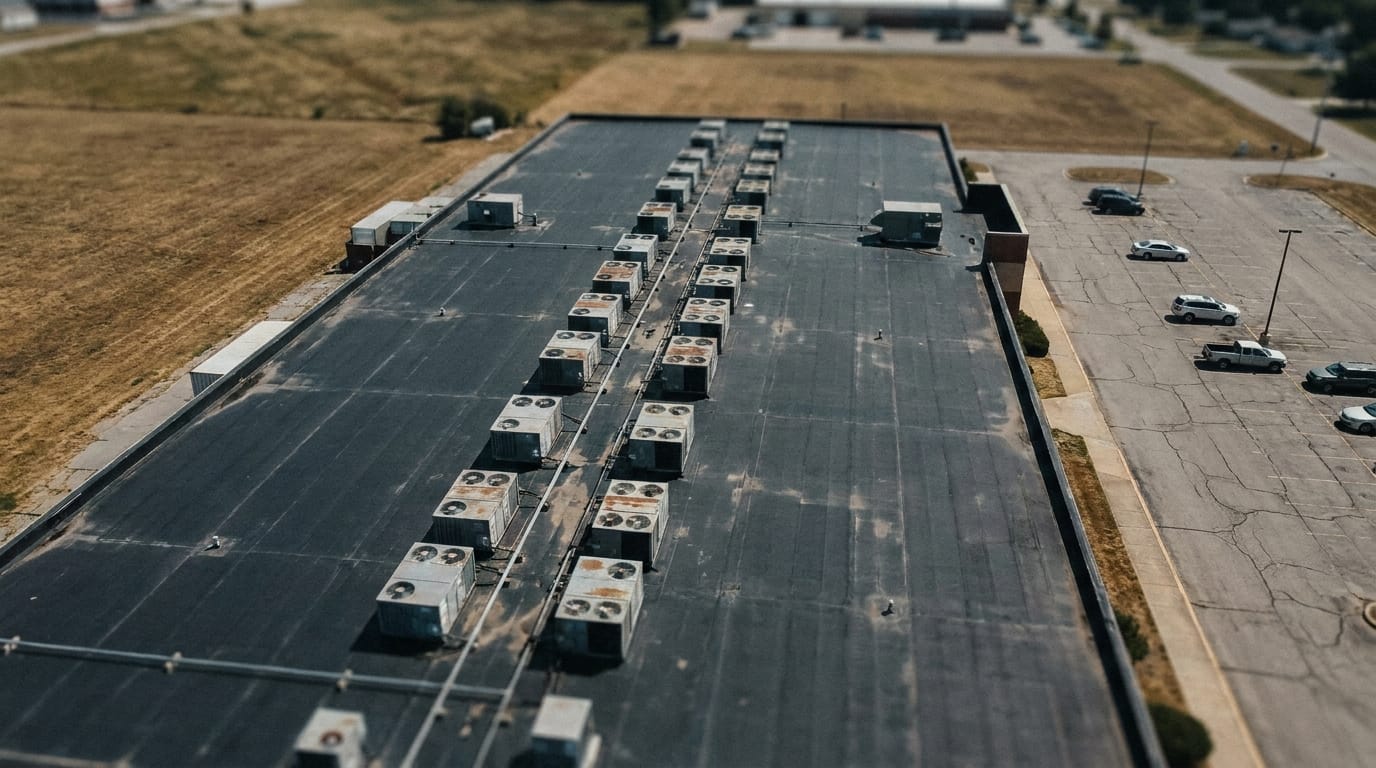
When a stretch of extreme heat settles over a region for several days, the conversation usually turns to the power grid and the electricity bill. The building surface that quietly drives a large share of that bill gets less attention: the roof. On a commercial building, the roof is the single largest surface exposed to the sun, and during a multi-day heat event it behaves very differently than it does on an ordinary hot afternoon. Understanding that difference is the key to keeping a cooling system, and an operating budget, closer to plan through the hardest weeks of summer.
A heat wave is a load, not a moment
A single hot afternoon is a spike. A multi-day heat event is a sustained load, and the difference matters because a roof and the space beneath it have thermal mass. On a normal day, a roof heats up in the afternoon and gives that heat back overnight, resetting close to a neutral starting point by morning. During a heat wave, overnight temperatures stay elevated, so the roof and the top-floor deck never fully discharge the heat they absorbed. Each day starts warmer than the last.
On a dark low-slope membrane, surface temperatures in direct summer sun commonly run 150 degrees Fahrenheit or higher, well above the surrounding air temperature. Sustained over several days, that surface heat becomes a continuous driver of cooling demand rather than a passing peak.
Why a dark roof never gets its overnight reset
Radiant heat is the mechanism at work. A dark roof absorbs solar energy through the day, and long after sunset it keeps re-radiating stored heat into the deck and the conditioned space below. When overnight lows stay high, there is little temperature difference to pull that heat back out, so the assembly holds it.
The result is a cooling system that never catches up. It runs into the evening to remove heat the roof is still giving off, then starts the next morning against a warmer baseline. Across a week-long event the load compounds instead of resetting. For a facility team, that shows up as longer equipment run times, higher afternoon demand, and less headroom when the next hot day arrives.
Reflection fades. Heat rejection holds.
Most cool-roof messaging centers on reflectance, and reflectance does real work: a bright surface bounces a portion of incoming sunlight before it becomes heat. The limitation is durability. A reflective surface delivers its best numbers on day one and then drifts as it collects dust, pollen, and grime, and the effect weakens during exactly the dry, dirty stretches when heat is worst.
Public research on cool roofs has long documented how reflective surfaces lose performance as they weather; the U.S. Department of Energy overview of cool roofs and the work of the Lawrence Berkeley National Laboratory Heat Island Group are useful primers on why aged performance, not day-one shine, is what counts.
Heat rejection is a different mechanism. Instead of relying only on a clean, bright surface, a heat-rejection coating blocks thermal transfer through the coating itself, at the particle level. Engineered hollow ceramic structures scatter heat and interrupt its path into the assembly, and because that barrier is physical rather than optical, it keeps working as the roof soils and weathers. Through a multi-day heat wave, holding a lower surface temperature day after day matters more than a strong first-day reading that fades.
What a cooler roof surface means downstream
A roof that runs cooler changes the math beneath it. Lower membrane temperatures mean less heat conducted into the top floor, so the cooling system spends more of the week near its design conditions instead of chasing a moving target. That translates into shorter afternoon run times and a flatter demand curve when the grid, and the building, are under the most stress.
There is a durability benefit as well. Membranes age faster under repeated thermal cycling and sustained high temperatures, so keeping the surface cooler reduces that thermal stress and supports a longer service life for the roof. This holds across the building types that carry the largest roof areas, from warehouses and manufacturing plants to retail and institutional campuses, which you can see in NanoTech's industries overview and case studies. The point is not one dramatic number. A cooler surface, held consistently, compounds in your favor across the same week that a hot roof compounds against you.
Where a heat-rejection coating fits
For facility managers and building owners weighing options before or during peak season, a heat-rejection coating is a way to address the roof without a full tear-off. Cool Roof Coat is built on Insulative Ceramic Particle technology and is engineered to block thermal transfer regardless of how dirty the surface gets. It bonds to common commercial substrates including TPO, EPDM, metal, and spray foam without a separate primer, and it can go on an existing roof with minimal operational disruption.
If your buildings struggled through the last heat event, the roof is a practical place to start. Explore the Cool Roof Coating system and connect with a Certified Applicator to match a coating to your roof assembly and your region.
Share this article
Ready to Transform Your Building's Performance?
Learn how NanoTech Materials' advanced coating solutions can help you achieve your energy efficiency and sustainability goals.
Get Started