

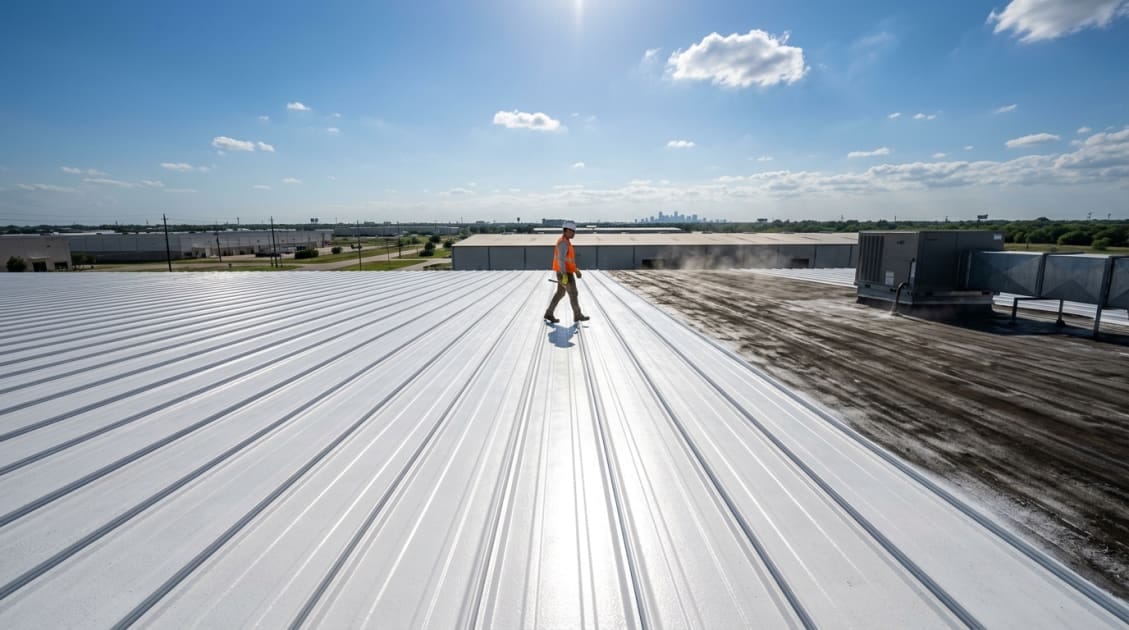
In the quest for enhanced building efficiency, particularly in retrofitting existing structures, understanding the interaction between solar radiation and building surfaces is crucial. This document explores the application of advanced coating technologies, focusing on NanoTech Material's Cool Roof Coat, which offers significant improvements in thermal management. By integrating cutting-edge materials science with practical HVAC considerations, this perspective aims to equip leading industry experts with knowledge and tools to optimize their building envelopes effectively. The subsequent sections will detail the properties of these coatings, their practical applications, and the resulting impact on HVAC system efficiency.
Reflectance and Reflectivity: Key Concepts for Solar Radiation Management
Reflectance: This parameter is crucial for assessing a material’s ability to reflect solar energy, thereby reducing heat gain in buildings. Defined as the ratio of reflected radiant flux to incident radiant flux, reflectance is a wavelength-dependent property, essential for selecting surface materials in building design. The distinction between specular reflectance (mirror-like reflection) and diffuse reflectance (scattered light) influences the choice of materials based on desired aesthetic and functional outcomes.
Reflectivity: Reflectivity extends the concept of reflectance by measuring a material’s inherent ability to reflect radiation, independent of its thickness. This property is particularly relevant for materials that are homogeneous and semi-infinite but varies in layered or finite materials. For engineers, understanding the difference between reflectance and reflectivity aids in selecting materials that optimize energy efficiency while meeting structural design requirements.
Practical Applications in HVAC and Building Design:
Material Selection: Engineers can utilize reflectance values to choose exterior finishes that reduce cooling loads and enhance HVAC efficiency.
Energy Efficiency Improvements: High reflectivity surfaces can significantly lower energy consumption by minimizing heat absorption, which is critical in retrofit projects aimed at improving building sustainability.
Standards and Testing: Reflectance and reflectivity are measured using standardized testing methods, ensuring that materials meet specific performance criteria as required by building codes and energy efficiency programs.
Conclusion:
Understanding and applying the principles of reflectance and reflectivity are vital for engineers focused on the design and retrofit of energy-efficient buildings. By choosing appropriate materials, engineers can improve the thermal comfort of interiors and reduce the overall energy footprint of buildings.
Emittance and Emissivity: Enhancing Building Energy Performance
Emittance: Defined as the ratio of the thermal radiation emitted by a material to that emitted by a perfect black body at the same temperature, emittance is a crucial factor in determining a material’s thermal performance. In the context of building design, especially HVAC systems, high emittance materials can help dissipate heat more efficiently, thereby reducing cooling loads and enhancing occupant comfort.
Emissivity: This property quantifies a material's ability to emit absorbed energy as thermal radiation. High emissivity materials can effectively reduce heat accumulation in building interiors by re-emitting solar energy absorbed during the day. This characteristic is particularly valuable in roofing materials and exterior coatings, where preventing heat transfer into the building can lead to significant energy savings.
Practical Applications in HVAC and Building Design:
Roofing Materials: Selecting roofing materials with high emissivity can prevent heat gain in attic spaces and upper floors, improving the overall efficiency of air conditioning systems.
Exterior Coatings: Advanced coatings with tailored emissivity properties can be applied to exterior surfaces to enhance thermal management. These coatings are especially beneficial in retrofit projects aimed at updating the building’s thermal performance, without extensive structural modifications.
Thermal Analysis and Compliance: Emissivity measurements help in assessing a material’s compliance with local and international energy efficiency standards, such as those set by the Leadership in Energy and Environmental Design (LEED) certification.
Conclusion:
For engineers and retrofit teams, understanding and utilizing the properties of emittance and emissivity are essential for designing buildings that are not only energy efficient but also comfortable for occupants. By incorporating materials with optimal emissive properties, the energy performance of both new and retrofitted buildings can be significantly enhanced.
Solar Reflectance and Solar Reflectance Index (SRI): Key Metrics for Thermal Management
Solar Reflectance: This property measures the ability of a material to reflect solar energy back to the atmosphere, rather than absorbing it as heat. Materials with high solar reflectance reduce the heat load on buildings, thereby decreasing the demand on HVAC systems during warm periods. This characteristic is crucial for selecting building materials that contribute to lower energy costs and enhanced indoor comfort.
Solar Reflectance Index (SRI): The SRI is an aggregated measure that combines solar reflectance and thermal emittance into a single value. It quantifies the roof's ability to reject solar heat, standardized such that a typical black surface has an SRI of 0 and a typical white surface has an SRI of 100. High SRI values are indicative of materials that can significantly reduce peak cooling demand.
Practical Applications in HVAC and Building Design:
Cool Roofing Solutions: Utilizing materials with high SRI values for roofing can dramatically improve a building’s energy efficiency. These materials are particularly effective in hot climates where air conditioning needs are higher.
Compliance with Energy Standards: SRI is a crucial factor in compliance with green building standards such as LEED. Materials that achieve higher SRI ratings can contribute to obtaining LEED points, which enhance the building's sustainability profile.
Retrofit Projects: For retrofitting projects, improving the solar reflectance properties of the building envelope can be a cost-effective way to reduce energy consumption and improve thermal comfort.
Conclusion:
Understanding and applying the principles of solar reflectance and SRI are essential for HVAC engineers and building designers. These metrics not only guide the selection of materials but also influence the overall energy management strategy of buildings. By integrating high SRI materials, retrofit projects can achieve significant improvements in energy efficiency and occupant comfort.
Energy Balance: Optimizing Material Properties for Thermal Regulation
Understanding the energy balance of building materials is essential for effective thermal management in building design and retrofitting. This balance involves the interaction of reflected, absorbed, and transmitted energy, which directly affects a building’s thermal environment and energy consumption.
Radiative Properties:
Reflectivity (ρ): This is the fraction of incident radiation that is reflected by a material. High reflectivity reduces heat absorption, beneficial for exterior surfaces exposed to significant solar radiation.
Absorptivity (α): This is the fraction of incident radiation that is absorbed and converted into heat. Managing absorptivity is crucial for maintaining comfortable interior temperatures.
Transmissivity (τ): This is the fraction of incident radiation that passes through a material. In building applications, minimizing transmissivity in exterior materials helps in reducing unwanted heat gain.
The conservation of energy principle dictates that the sum of these properties must equal one (ρ + α + τ = 1). For opaque materials, which are typical in building constructions, transmissivity is zero, simplifying the equation to ρ + α = 1. This relationship is critical for engineers to understand and manipulate through material choices and design strategies.
Practical Applications in HVAC and Building Design:
Material Selection: Engineers must select materials with optimal radiative properties to control the thermal dynamics of a building. For example, choosing materials with high reflectivity and low absorptivity for roofing can prevent excessive heat buildup.
Thermal Comfort Analysis: By analyzing the energy balance of different materials, engineers can predict how they will impact the building’s thermal comfort and adjust HVAC requirements accordingly.
Building Energy Efficiency: Properly understanding and applying energy balance principles can lead to more energy-efficient building designs. This is crucial for meeting both regulatory energy efficiency standards and sustainability goals.
Conclusion:
The energy balance of materials plays a pivotal role in the thermal management of buildings. By carefully selecting materials based on their radiative properties, engineers can enhance building energy efficiency, reduce HVAC loads, and improve occupant comfort. This understanding is especially valuable in retrofit projects where modifications to the building envelope can lead to significant energy savings.
Thermal Resistance: Enhancing Efficiency Through Material Properties
Overview of Thermal Resistance: Thermal resistance is a measure of a material's ability to resist the flow of heat. It is defined by the formula 𝑅=𝐿𝑘×𝐴R=k×AL, where 𝑅R is the thermal resistance, 𝐿L is the thickness of the material, 𝑘k is the thermal conductivity, and 𝐴A is the cross-sectional area through which heat is flowing. For engineering purposes, it is often simplified to 𝑅=𝐿𝑘R=kL when considering a unit area. High thermal resistance indicates better insulation properties, making a material effective at reducing heat transfer.
Significance in HVAC and Building Design:
Insulation Material Selection: Engineers use thermal resistance values to select insulation materials for walls, roofs, and floors. Materials with higher 𝑅R-values are preferred for their superior insulation properties, which can significantly reduce the heating and cooling demands of a building.
Regulatory Compliance and Energy Codes: Many building codes specify minimum thermal resistance values for different components of a building. Adhering to these standards ensures that buildings meet energy efficiency requirements, which is critical for regulatory compliance and environmental certifications like LEED.
Energy Modeling and Performance Analysis: By incorporating thermal resistance data into building energy models, engineers can more accurately simulate both energy consumption and thermal behaviors. This is crucial for designing efficient HVAC systems and optimizing building performance.
Practical Applications:
Building Retrofitting: In retrofit projects, improving the thermal resistance of existing structures can lead to substantial energy savings. For instance, adding insulation to an older building can significantly enhance its energy performance.
Heat Flow Analysis: Calculating thermal resistance helps in understanding and managing heat flow within building assemblies, aiding in the design of more energy-efficient structures.
Conclusion:
Understanding and utilizing thermal resistance is fundamental for HVAC engineers and building designers aiming to enhance building energy efficiency and occupant comfort. It serves as a critical factor in material selection, energy modeling, and compliance with building standards, playing a key role in the overall thermal management strategy of both new constructions and retrofits.
Thermal Conductivity: Key to Effective Heat Management
Understanding Thermal Conductivity: Thermal conductivity (𝑘k) is a material property that quantifies the ability of a material to conduct heat. It is measured in watts per meter-kelvin (W/m·K) and plays a pivotal role in determining how quickly heat can pass through a material. Lower thermal conductivity materials are effective as insulators because they slow down heat transfer, while high thermal conductivity materials are used where quick heat dissipation is required.
Significance in HVAC and Building Design:
HVAC Efficiency: Materials with appropriate thermal conductivity are selected to enhance the efficiency of HVAC systems. Insulation materials with low 𝑘k-values are used to minimize heat loss in colder climates and heat gains in warmer climates.
Building Envelope Performance: The thermal conductivity of materials used in a building’s complete envelope directly impacts the building's overall energy efficiency. Using materials with optimized 𝑘k-values can significantly reduce the need for additional heating or cooling, leading to significant energy savings.
Practical Applications:
Material Selection for Insulation: Engineers must choose insulation materials with low thermal conductivity to ensure effective thermal barriers, particularly in exterior walls and roofing.
Heat Transfer Analysis: Thermal conductivity is crucial for performing detailed heat transfer analysis in building simulations, which helps in designing buildings that maintain thermal comfort while using less energy.
Regulatory Standards and Compliance: Understanding and applying the right 𝑘k-values is essential for meeting building codes and standards that dictate energy efficiency requirements.
Conclusion:
Thermal conductivity is a fundamental property that HVAC engineers and building designers must understand deeply to optimize the thermal efficiency of buildings. By selecting materials with suitable 𝑘k-values, professionals can ensure that buildings not only meet stringent energy efficiency standards but also provide comfortable living and working environments.
Integrating Solar Reflectance and R-Value with Nanotech Material’s Advanced Coatings
Overview: Nanotech’s Cool Roof Coat exemplifies the integration of high solar reflectance and low thermal conductivity in a single coating solution, demonstrating significant advancements in building material technology. This innovative product is designed to enhance energy efficiency in both new buildings and retrofit projects.
Solar Reflectance and R-Value:
Solar Reflectance: Nanotech’s coatings are engineered to reflect a high percentage of solar radiation, significantly reducing heat absorption by the building envelope and, consequently, cooling demands.
R-Value: Despite the thinness of the coating, its innovative formulation achieves an R-value that contributes effectively to the building's insulation, challenging the conventional notion that only thick materials can provide substantial insulation.
Innovative Properties of Nanotech’s Coatings:
Low Thermal Conductivity: Nanotech’s coatings feature ultra-low thermal conductivity, which minimizes heat transfer through the coating itself, enhancing the overall thermal resistance of the roof system.
Field Test Results: Real-world applications and field tests have shown that buildings treated with Nanotech’s Cool Roof Coat maintain interior temperatures closer to external ambient conditions, leading to substantial HVAC energy savings.
Practical Applications in Building Design:
Energy Savings: Buildings with roofs coated with Nanotech’s product have demonstrated energy savings ranging from 15% to 50% in HVAC energy use, often significantly higher than typical reflective coatings.
Enhanced Comfort: The coating’s ability to maintain lower roof temperatures translates into improved indoor comfort and reduced strain on air conditioning systems during hot weather.
Conclusion:
Nanotech’s integration of high solar reflectance and low thermal conductivity in its Cool Roof Coat represents a significant leap forward in roofing technology. By adopting this innovative coating, engineers and building designers can achieve remarkable improvements in energy efficiency and occupant comfort, making it an essential consideration for both new construction and retrofit projects.
Conclusion: Harnessing Advanced Coatings for Enhanced Building Efficiency
Throughout this discussion, we have explored the critical role of advanced coatings, specifically focusing on Nanotech Material's Cool Roof Coat, in enhancing the energy efficiency and thermal management of buildings. By delving into the properties of solar reflectance, emissivity, thermal resistance, and conductivity, we've outlined how innovative materials can significantly impact building performance.
Key Takeaways:
High Solar Reflectance and Emissivity: Materials that reflect more solar radiation and emit more absorbed heat contribute to cooler building surfaces, reducing cooling loads and enhancing HVAC efficiency.
Thermal Resistance and Conductivity: Utilizing materials with high thermal resistance and low thermal conductivity ensures better insulation, minimizing unwanted heat transfer and optimizing energy use.
Practical Applications: The integration of these properties in products like Nanotech’s Cool Roof Coat allows for substantial improvements in energy savings and occupant comfort, making them invaluable in both new constructions and retrofit projects.
Call to Action:
As we continue to push the boundaries of building design and strive for sustainability, it is crucial for engineering teams to integrate advanced material technologies into their projects. By adopting solutions like Nanotech's innovative coatings, we can achieve significant advancements in energy efficiency and make strides toward more sustainable and comfortable living and working environments.
We encourage the engineering department to consider these advanced materials in future design and retrofit initiatives, ensuring that our buildings are not only more energy-efficient but also aligned with our environmental goals.
Share this article
Ready to Transform Your Building's Performance?
Learn how NanoTech Materials' advanced coating solutions can help you achieve your energy efficiency and sustainability goals.
Get Started