

Executive Summary
Wildfires increasingly threaten critical U.S. infrastructure, with temperatures soaring to 1,800°F–2,200°F, destroying unprotected materials within minutes. At the writing of this article, L.A. fires have already consumed over 57,000 acres and are projected to exceed $30 billion in damages.
Throughout the US, the extensive highway networks traverse diverse landscapes, including coastal cliffs, mountainous regions, and valleys, necessitating numerous retaining structures to ensure road stability and safety. Departments of Transportation (DOTs) are under mounting pressure to protect vital assets—bridges, highways, and retaining walls—while balancing cost, safety, and sustainability.
NanoTech Wildfire Shield, an advanced fire-resistant coating, is mitigating these risks. By fortifying timber lagging used in DOT projects, this technology allows agencies to maintain cost-effective materials while safeguarding investments and reducing long-term vulnerabilities.
The Current State of Timber Lagging in DOT Projects
Timber lagging remains a cornerstone for retaining walls and shoring in bridge and highway construction due to its:
Affordability: 40-60% lower costs compared to concrete alternatives.
Quick Installation: Faster project timelines, minimizing road closures.
Adaptability: Suitable for both temporary and permanent applications.
Risks and Challenges
Recent years have exposed critical vulnerabilities in traditional timber lagging systems. While timber lagging has clear benefits, it is increasingly vulnerable to wildfire damage:
Extended Fire Seasons: Wildfires now burn hotter and longer, threatening infrastructure stability.
High Replacement Costs: Fire-damaged timber must often be replaced, straining budgets.
Environmental Concerns: Disposal of chemically treated timber raises sustainability challenges.
Concrete Alternatives: While fire-resistant, concrete is expensive, time-intensive to install, and often impractical for emergency repairs.
The Innovation: Advanced Fire Protection Technology
NanoTech Wildfire Shield transforms traditional timber lagging into a fire-resistant, long-lasting solution. The coating is designed to withstand temperatures up to 3,272°F—far exceeding wildfire temperatures—providing immediate and continuous protection.
Key Advantages:
Extended Lifespan: NanoTech Wildfire Shield protected timber lasts 10-15 years compared to 5-7 years for untreated timber.
Immediate Fire Protection: No activation period required, offering constant readiness.
Non-Toxic and Sustainable: The technology requires no activation energy to work, meaning zero harmful fumes during fires and no leaching of hazardous chemicals, addressing environmental concerns.
Versatile Application: Compatible with both timber and concrete, making it suitable for a wide range of projects.
Cost-Benefit Analysis: Untreated Timber vs Timber Coated with Wildfire Shield
Metric | Traditional Timber Lagging | Timber Lagging with NanoTech Wildfire Shield |
|---|---|---|
Initial Cost (per linear foot) | $150 | $225 |
Replacement Frequency | Every 5-7 years | Every 10-15 years |
Fire Risk | High | Low |
Long-Term Costs | Higher due to frequent replacement | Lower due to extended durability |
Concrete Alternative Cost | $450+ per linear foot | $225 with treated timber |
Investing in NanoTech materials, Inc. Wildfire Shield reduces replacement cycles, avoids costly concrete upgrades, and ensures infrastructure resilience during wildfires.
Emergency Response in Action: Project Overview
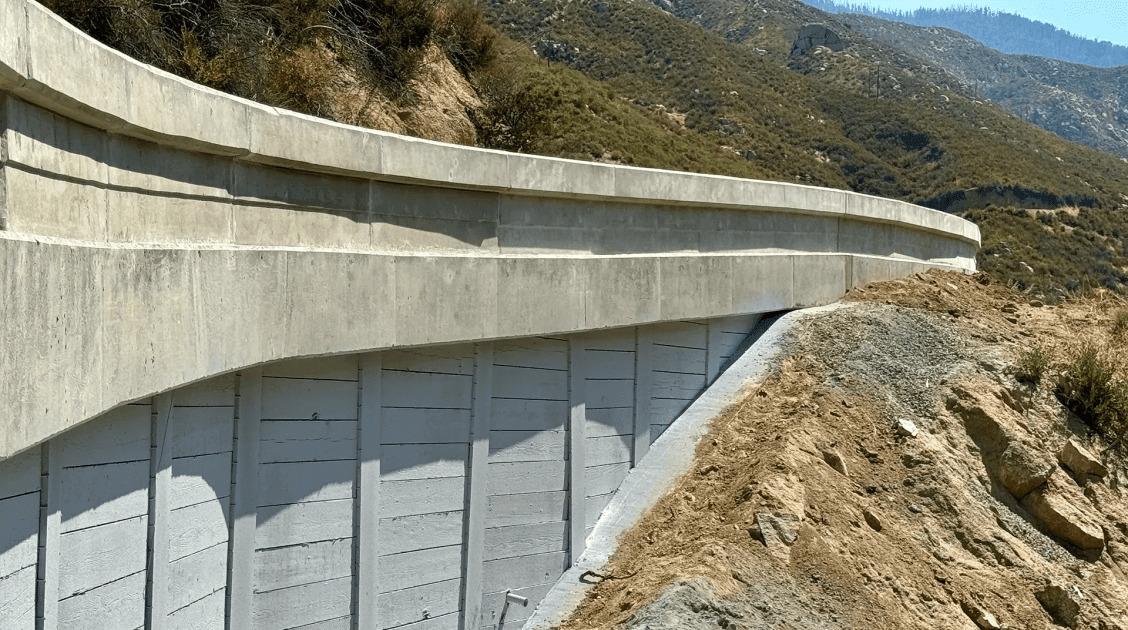
When wildfires threatened a critical highway, the state DOT needed to act swiftly to prevent chaos and extended highway closures. The damage to the timber-lagging retaining wall along the major highway demanded immediate repairs to maintain traffic flow and prevent further collapse.
Challenges:
Urgency: Repairs were needed immediately to avoid extended road closures.
Budget Constraints: Concrete replacement would have tripled project costs.
Access Limitations: Heavy equipment was impractical for the location.
Solution:
NanoTech Materials, Inc. Wildfire Shield was applied directly to the timber lagging, creating a fire-resistant barrier. The coating allowed the DOT to retain the cost benefits of timber while enhancing its durability.
Outcome:
Rapid Deployment: Repairs were completed within days, minimizing disruption.
Significant Savings: The DOT avoided costly concrete replacement
Long-Term Resilience: The treated timber is now protected against future wildfires, has a 10–15-year lifespan, and will help mitigate the fire from jumping the highway.
Concrete Applications and Benefits
NanoTech Wildfire Shield also enhances the fire resistance of concrete structures. Although inherently fire-resistant, concrete can crack and degrade under extreme wildfire temperatures. Treating concrete retaining walls and supports with NanoTech Materials, Inc. Wildfire Shield, adds an additional layer of protection, ensuring:
Extended Material Longevity: Reduced risk of cracking and spalling.
Cost Savings: Avoid premature repairs and replacements.
Resilience: Ensuring roadways and bridges remain operational during and after wildfire events.
Considerations for Wood Timber Lagging and Concrete Wall Shoring Systems
For DOTs facing diverse project needs, choosing between wood timber lagging and concrete wall shoring systems often comes down to balancing speed, cost, and long-term durability.
Wood Timber Lagging Walls:
Rapid Installation: Faster to construct due to simpler installation methods. Soldier piles are driven or drilled into the ground first, followed by inserting wood timbers between the piles. It is ideal for emergency shoring where speed is critical.
Cost: Estimated costs for a 1,300-square-foot wall (the average size) range from $65,000 to $130,000, making it exceedingly budget-friendly.
Considerations: Choose a wood timber lagging wall if the speed of installation is crucial and budget constraints are present.
Concrete Wall Shoring System:
Installation: Slower to construct due to the need for excavation, forming, pouring, and curing concrete, which can take 7–28 days, depending on the mix.
Cost: Higher upfront costs, with estimates ranging from $195,000 to $390,000 for a 1,300-square-foot wall.
Considerations: A concrete wall shoring system should be used if load-bearing capacities are a key priority and higher up-front costs are not an issue.
Conclusion
Wildfires are an undeniable threat to critical infrastructure. Departments of Transportation cannot afford to gamble with unprotected materials that compromise safety, increase costs, and delay projects. NanoTech Wildfire Shield delivers an immediate, proven solution for enhancing the fire resistance of timber and concrete structures.
For DOTs, this means faster project timelines, reduced maintenance cycles, and critical infrastructure that stands resilient in the face of escalating wildfire intensity. When every minute counts in emergency situations, and every dollar matters in long-term planning, NanoTech Wildfire Shield bridges the gap between affordability and performance.
Moving beyond reactive measures and adopting technologies is critical to safeguard roads, bridges, and highways before disaster strikes. NanoTech Wildfire Shield ensures the infrastructure we depend on today will remain safe, operational, and cost-effective tomorrow.
Share this article
Ready to Transform Your Building's Performance?
Learn how NanoTech Materials' advanced coating solutions can help you achieve your energy efficiency and sustainability goals.
Get Started