

Editor's note: Cool Touch is now NanoTech Insulator, part of NanoTech's Insulative Coating System. This article is shown as originally published.
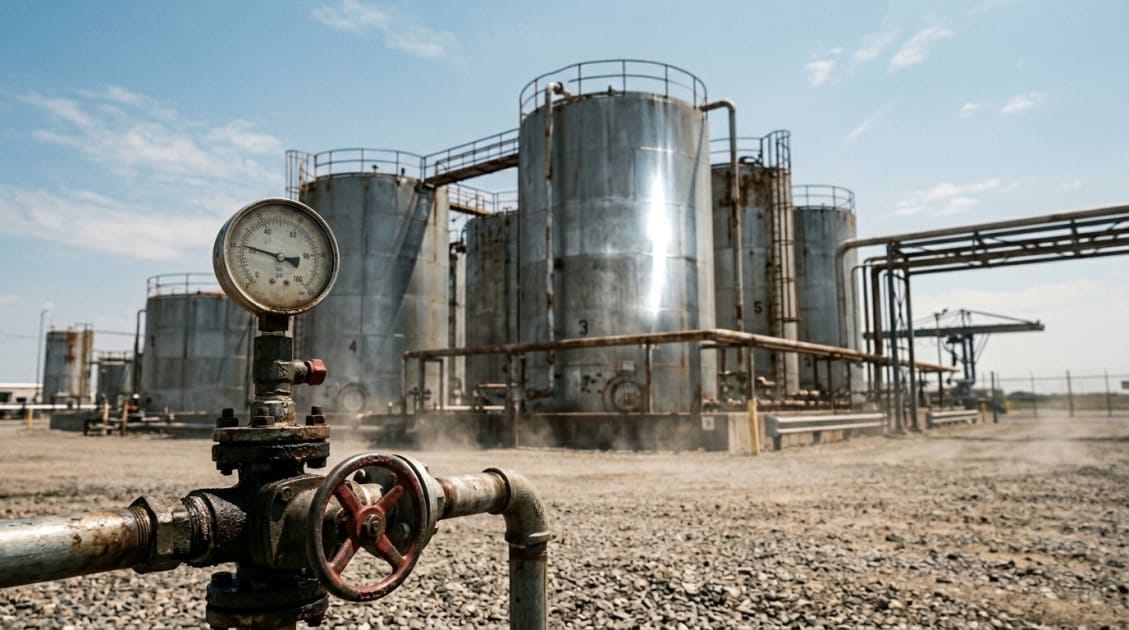
Across refineries, terminals, and processing plants, much of the steel in service today was installed decades ago. Replacing it wholesale is rarely realistic, so the practical mandate is to keep aging assets running and productive for as long as possible. That means staying ahead of two slow problems that quietly shorten an asset's remaining life: heat and hidden corrosion.
Both problems often live in the same place, under the insulation. How a facility treats the surface of a pipe, tank, or vessel determines how much heat it loses or gains, and whether moisture is working against the steel where no one can see it. Get the surface right and a surprising amount of integrity and energy trouble takes care of itself.
The Heat Is Not Only Coming From Inside
Engineers usually think about hot equipment in terms of process temperature. Outdoors, that is only half the picture. Steel standing in direct sun gains heat from solar load on top of whatever the contents are doing, and on a clear afternoon a sun-facing tank wall or pipe run can sit well above the surrounding air.
That radiant gain carries two costs. It drives surface temperatures toward the point where brief contact injures a worker, and it adds heat the process then has to pull back out. Published guidance on heated surfaces (ASTM C1055) describes how contact with bare metal near 140 degrees Fahrenheit can injure skin in a matter of seconds. Surface temperature is a personnel exposure question and an energy question at once, and solar load makes both worse before the process even starts.
Why Corrosion Under Insulation Stays Hidden
Corrosion under insulation, or CUI, is among the most costly integrity problems a process facility deals with, largely because it stays out of sight. Conventional jacketed insulation leaves an air gap, an annulus, between the wrap and the steel. Rain, washdown water, and condensation all find that gap and pool against the metal. Industry groups such as AMPP (formerly NACE) treat it as a core asset-integrity discipline for exactly this reason.
CUI is most aggressive across the temperature band where water can persist on a surface, a range commonly cited from below freezing up to roughly 350 degrees Fahrenheit. Within that band, a damp annulus turns insulation from a protective layer into a corrosion incubator. Because the wet steel is buried under cladding, the damage frequently announces itself only at a turnaround inspection, or worse, at an unplanned failure. The longer an asset has been in service, the more places water has had a chance to settle.
A Thin Barrier That Bonds to the Steel
A different approach removes the gap altogether. Insulative ceramic coatings are built from engineered hollow ceramic particles that act as a physical thermal barrier at the particle level, applied as a thin film that bonds directly to the substrate rather than wrapping around it.
Because the film bonds to the steel with no annulus, there is no cavity for water to collect in, which goes after the root geometry behind CUI rather than the symptom. The same ceramic barrier rejects radiant heat and blocks thermal transfer, so it trims solar gain and holds the touchable surface temperature down. Performance also holds as the surface weathers and collects dirt, because the barrier works at the particle level, not at a surface sheen.
There is an inspection advantage too. A bonded surface stays exposed, so crews can examine the asset directly instead of cutting away cladding to learn what the steel underneath is doing. The layer that protects the asset no longer hides its condition.
Life Extension Without a Rip-and-Replace
For aging infrastructure, the real draw is that all of this happens in place. A spray-applied ceramic coating conforms to the valves, elbows, flanges, and complex geometry that pre-fabricated jacketing tends to leave bare, so the fittings that are hardest to cover get the same treatment as the straight runs.
This is the intent behind the NanoTech Insulative Coating System, including the Cool Touch line for high-heat equipment. One bonded layer manages heat loss or gain, holds the kind of surface temperatures OSHA and NACE guidance points toward, and closes the moisture path that drives CUI, all while keeping the asset inspectable for the rest of its working life. The technical documentation lays out the substrates, thicknesses, and performance figures in detail.
A Practical Next Step
Extending the life of aging steel is less about any single property and more about handling heat and corrosion together, at the surface, without taking the unit down. That is exactly the problem a bonded insulative ceramic coating is designed to address.
To see where it fits on your equipment, explore the NanoTech Insulative Coating System or contact our team to walk through a specific application.
Share this article
Ready to Transform Your Building's Performance?
Learn how NanoTech Materials' advanced coating solutions can help you achieve your energy efficiency and sustainability goals.
Get Started